
 Globiscope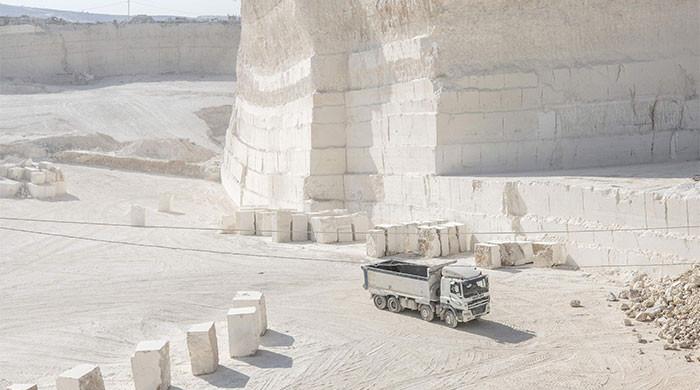
The Palestinian economy is collapsing. Yet deep inside the occupied West Bank, quarry machines continue to roar. Massive walls of pale limestone stretch toward the horizon. For many families, this stone remains the last lifeline.
A Lifeline Carved From Stone
Faraj al-Atrash operates a quarry near Beit Fajar, close to Hebron. He gestures toward heavy machinery biting into white rock. His pride is clear. So is his fear.
“This is the main source of income for the entire region,” Atrash says. Still, he feels under siege. He believes Israel has shifted pressure from military control to economic strangulation.
The quarry produces Jerusalem stone. Builders have used this pale limestone across the Holy Land for thousands of years. It defines the region’s architecture. Today, it defines survival.

Economic Pressure Tightens
However, the industry faces mounting threats. Quarry owners fear equipment seizures. They worry about settlement expansion. They struggle with rising costs.
The war in Gaza, triggered by Hamas’s October 2023 attack, shattered an already fragile economy. According to UN trade officials, Palestinians are now enduring the worst economic crisis ever recorded.
Meanwhile, Israel has installed hundreds of new checkpoints. Transport has slowed. Trade has stalled. Work permits for Palestinians have disappeared.
Exports Collapse, Costs Rise
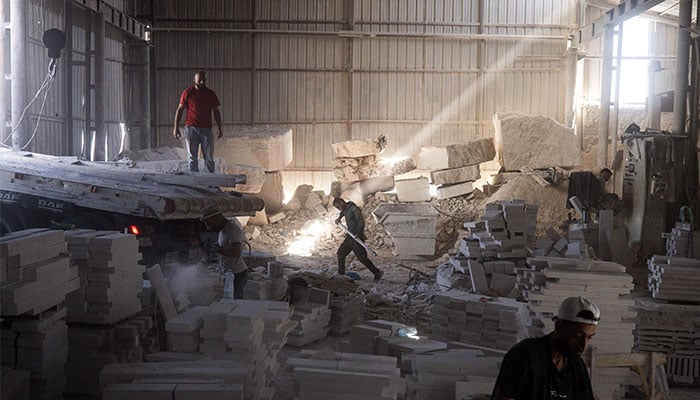
Ibrahim Jaradat’s family has owned a quarry near Sair for more than four decades. He says exports have nearly collapsed.
“We used to sell most of our stone to Israel,” Jaradat explains. “After October 7, everything became difficult.”
At the same time, the Palestinian Authority teeters on the edge of bankruptcy. Public services barely function. Water and electricity costs continue to surge.
Despite this, quarries still contribute about 4.5% of Palestinian GDP. Nearly 20,000 people depend on them for work.
Dependence on the Israeli Market
About 65% of Palestinian stone exports go to Israel. Some Israeli cities even require Jerusalem stone by law.
“Most of our buyers are Israeli,” says Abu Walid Riyad Gaith, a 65-year-old quarry operator. He also expresses frustration with Arab countries.
“They don’t buy enough from us,” he says.

Land, Settlements, and Fear
Most West Bank quarries sit in Area C. Israel controls this land completely. It also contains most Israeli settlements.
Some Israeli officials openly discuss annexation. Quarry owners fear losing everything.
International law considers Israeli settlements illegal. Yet construction continues at the fastest pace since 2017, according to the United Nations.
Working Through Pain
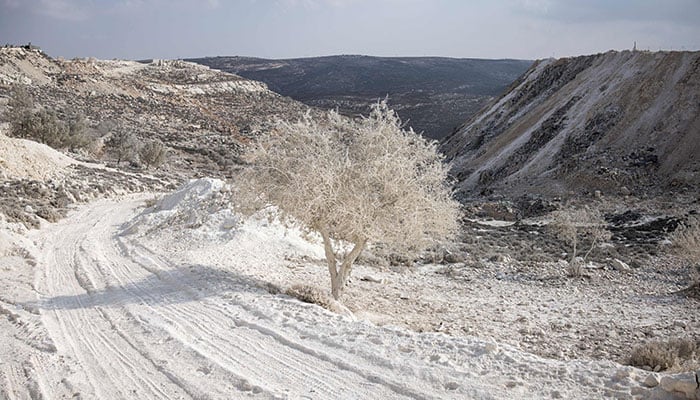
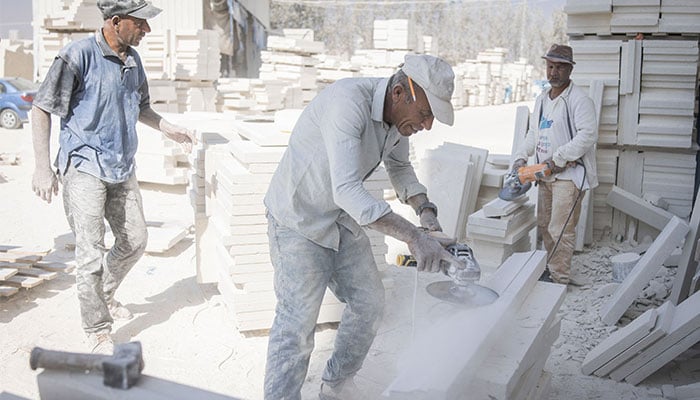
Quarry work is brutal. Dust fills the air. Muscles strain. Eyes burn.
“We are working ourselves to death,” Atrash says, watching his workers move through deep pits coated in white powder.
In one quarry, a former geography teacher now labours beside machines. Budget cuts ended his salary. This was the only job left.
Every worker interviewed reported back pain, eye damage, and throat problems.
‘White Gold’ Losing Its Shine
Workers call Jerusalem stone “white gold.” It once brought steady income. Now, uncertainty overshadows everything.
“People have no money,” says stonemason Laith Derriyeh. “Those who do are afraid to build.”
Conclusion: An Industry Hanging by a Thread
The Jerusalem stone industry still stands. But it stands under crushing pressure.
Political uncertainty, economic collapse, and relentless labour threaten its future. For thousands of Palestinian families, the fate of this ancient stone now mirrors their own — resilient, worn, and dangerously close to breaking.
Home Sweet Home Wooden Door Sign – Boho Front Door Welcome Wall Decor by TOARTi





 T" />
T" />

